A city-report interpretation sheet for regional campaigns
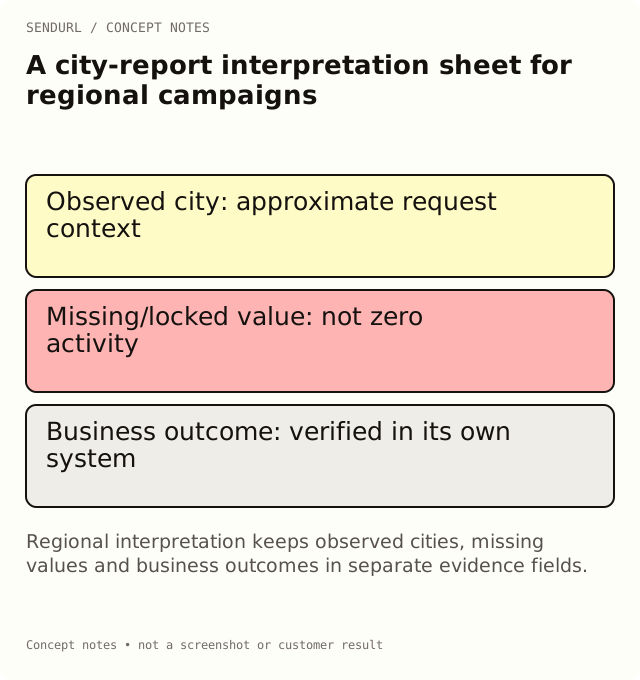
Record what the location signal measures, what is missing and which regional decision it can support. A city label is an estimate, not a customer address or an identity record.
A regional campaign report lists a city the sales team did not expect. Before reallocating a budget, ask what the location signal actually describes. Network routing, shared addresses and incomplete records can make request geography differ from a customer’s residence or purchase market.
State the decision and its evidence
For an illustrative training campaign, the team wants to know which regions may need more local-language support. City activity can suggest where to investigate. Actual language needs still require evidence from the support task and the audience, rather than a geographic guess alone.
Regional question:
Selected links or folder:
Dates and timezone:
Plan and location report used:
Observed country/city pattern:
Missing or unavailable location values:
Relevant distribution context:
Evidence from destination outcomes or customer feedback:
Interpretation supported:
Interpretation not supported:
Next regional check and owner:
Investigate the unexpected city
Check whether the link was distributed through a partner, forwarded or used in another placement. Review country and device context where useful, while remembering that these are observations about requests. Do not invent an explanation for an unfamiliar city when the available evidence cannot distinguish the cause.
A missing city is not zero traffic from that place. Record missing or unavailable values separately from the observed groups. On Free, city information is restricted by the advanced-analytics entitlement; a locked value must not be reported as a measured absence.
Join cautiously with business outcomes
The commerce system may record a shipping market while the link report describes a request’s approximate network location. Those are different fields with different purposes. An apparent mismatch does not automatically establish fraud, travel or a tracking failure.
Use a separately defined outcome when the decision concerns sales or registration. Keep any join at an appropriate aggregate level, with the assumptions written down. Do not use the sheet to build named visitor profiles from anonymous route data.
Choose the next useful observation
If the campaign’s question is language support, review localized destination completion or actual support feedback. If it is partner distribution, inspect the placement register. Let the business task determine the next check rather than allowing an attractive map to define a new claim.
Cities and approximate unique visitors are Pro+ advanced analytics. Compare the current plans before making the report a required recurring deliverable. Create a SendURL account for the regional placement links when a consistent inventory will support the investigation.
Location background
Use Click Country and Device Data to Target Campaigns and Can You See Who Clicked Your Link? explain the boundaries of location and identity evidence.
Frequently asked questions
Is a city value a shipping address?
No. It is approximate request-location information, not the address used in a commerce transaction.
Should locked city data on Free be entered as zero?
No. It is unavailable under that entitlement, not an observed zero.
Can the sheet identify the person behind an unusual location?
No. The report does not establish a named individual or their intent.
Start tracking links free.
Create your first short link with click analytics in seconds. No credit card, no sign-up to start.